
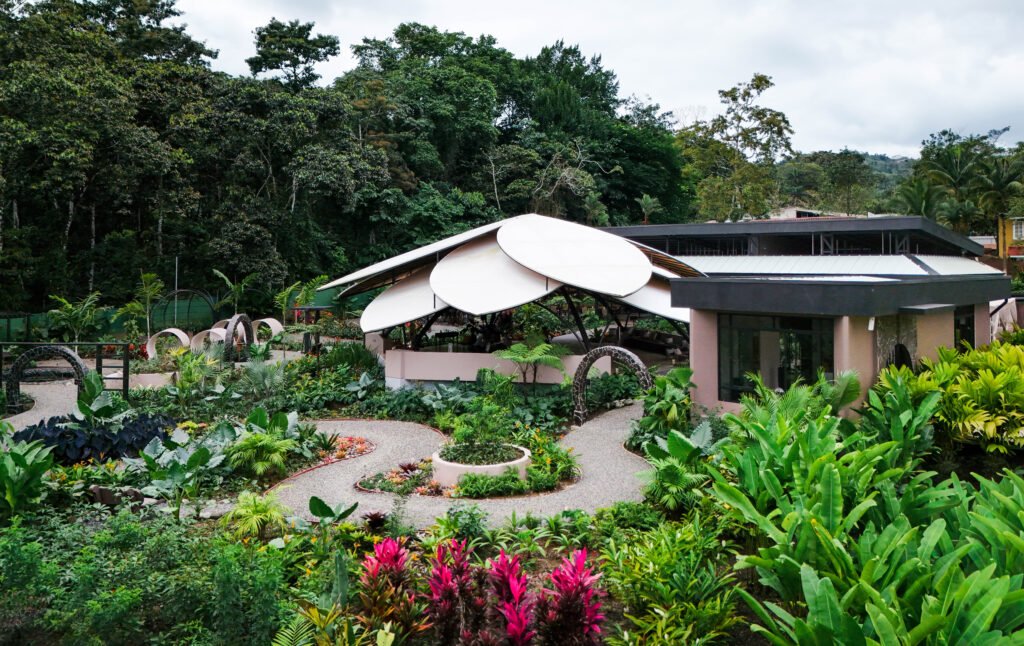
Depleted professionals don’t need a vacation. They need an environment that is structurally different from the one that burned them out. A beach resort with a spa menu and a poolside cocktail will not reset a nervous system that has been locked in overdrive for two years. What actually works is a different culture, a different setting, and a deliberately designed healing program. If you’re searching for a retreat for burnout, Costa Rica offers focused recovery programs that go far beyond anything a standard vacation can provide, and Moon Gate Wellness Sanctuary, nestled beneath Arenal Volcano in La Fortuna, is the clearest example of how this convergence manifests itself in its fullest expression. This article breaks down exactly why a burnout retreat in Costa Rica works and how to find the right program for where you are right now.
Retreat for Burnout in Costa Rica: Why It Works Differently Than a Regular Vacation
Costa Rica functions as a burnout recovery destination for reasons that go well beyond scenery. The cultural philosophy actively deprioritizes productivity as an identity marker. The ecology delivers measurable physiological benefits. And the practical logistics remove the friction that prevents depleted professionals from getting there in the first place. Each factor addresses a distinct barrier that keeps burned-out people from actually recovering.
The pura vida effect and why it matters for recovery
“Pura vida” is not a tourism slogan. It is a deeply embedded social philosophy that genuinely deprioritizes productivity as an identity marker. In Costa Rica, rest is not performed guiltily between obligations, it is woven into daily life as a value. For an American professional who has spent years in an environment that equates busyness with worth, arriving in a culture that does not reward overwork creates an immediate psychological permission structure for slowing down. That permission is not a small thing. It is the first physiological step in nervous system recovery.
What rainforest immersion does to a stressed body
The science behind forest bathing, known in Japanese practice as shinrin-yoku, is no longer theoretical. Meta-analyses confirm that forest immersion reduces salivary cortisol by 12 to 16 percent, increases parasympathetic nervous system activity, and lowers blood pressure within 20 to 30 minutes of exposure. The mechanism involves phytoncide inhalation, reduced amygdala activation, and multi-sensory grounding. Costa Rica’s Arenal rainforest delivers this at an intensity that a beach vacation simply cannot replicate. Visual rest is one thing. The full biophilic depth of a dense jungle canopy, constant birdsong, humidity, and the physical presence of one of the world’s most active volcanic landscapes is something categorically different. For professionals pursuing stress recovery in Costa Rica, the environment itself is part of the treatment.
Why U.S. professionals choose Costa Rica over Bali or Europe
The practical case matters enormously when you’re burned out, because logistical friction is itself a recovery barrier. Costa Rica requires no visa for U.S. citizens. Direct flights from major hubs run 4 to 6 hours, with non-stop routes from New York starting around $143 to $205 one-way. From Miami, Houston, Los Angeles, and Chicago, one-stop connections run $360 to $810 round-trip. The time zone shift is minimal, English is widely spoken, and the country has spent a decade building a credible reputation as a wellness destination. Bali has its own merits, but it is a 20-hour travel commitment. Costa Rica removes the friction, allowing recovery to begin before you land.
What a Burnout Recovery Retreat in Costa Rica Actually Looks Like Day to Day
Many professionals avoid retreats because they don’t know what they’re walking into. The unknown is another stressor, and burned-out people are not looking for more of those. A structured day inside a quality burnout recovery program is deliberate, unhurried, and built around one non-negotiable physiological principle: the body needs recovery time it cannot be argued out of.
The daily rhythm from morning practice to evening integration
A representative day begins with sunrise movement, gentle yoga, or a mindful forest walk, followed by a nourishing breakfast with time for journaling. Morning workshops or one-on-one sessions run until midday. Then comes the element that separates substantive recovery programs from wellness vacations: a mandatory midday rest period with no scheduled activities. This is not filler. This is where the parasympathetic nervous system does the actual repair work it cannot complete when the schedule never stops. Afternoons offer free time, optional nature excursions, or spa treatments. Breathwork or somatic practice precedes dinner, and evenings close with an integration circle or sound bath rather than entertainment.
Core therapies that move the needle on burnout
The therapeutic toolkit in quality programs combines breathwork for nervous system regulation, somatic therapy for releasing stored physical tension, Ayurvedic treatments for restoring constitutional balance, restorative yoga, meditation, and trauma-informed coaching. What distinguishes a burnout recovery retreat from an expensive spa experience is sequencing. These modalities work in combination, building on each other across days rather than existing as standalone services you pick from a menu. A sequenced, multi-modal program addresses burnout at the physiological, emotional, and behavioral level simultaneously, the only approach that produces lasting change.
Moon Gate Wellness Sanctuary: Built for High-Achievers Who Are Seriously Depleted
Moon Gate Wellness Sanctuary in La Fortuna, Costa Rica operates as a purpose-built burnout recovery environment for professionals who need more than rest. They need a container that honors their intelligence, delivers real therapeutic depth, and doesn’t ask them to tolerate low-quality logistics while trying to heal.
Ayurveda, sacred ceremony, and the Arenal rainforest setting
Moon Gate’s location beneath Arenal Volcano is a deliberate healing choice, not a scenic backdrop. Natural hot springs, the Trail of Senses nature immersion experience, and the constant presence of the volcanic landscape create a recovery environment that works on the body even when the guest is not in a formal session. The sanctuary’s programming integrates Ayurvedic workshops, cacao ceremonies, fire ceremonies, and forest bathing into a structured daily rhythm led by world-renowned Vedic and yogic practitioners. The retreat is capped at 25 guests to ensure meaningful intimacy rather than the anonymity that allows avoidance to continue masquerading as rest.
Why the 30-day post-retreat integration program changes everything
Most retreats end when you leave. The most common failure point in burnout recovery is returning home to the same environment, the same cues, and the same relational patterns that drove depletion in the first place. Moon Gate addresses this directly through a 30-day post-retreat integration program led by trauma-informed embodiment guide Oliveyah Fisch. The program moves through four phases, stabilization, pattern awareness, habit formation, and consolidation, supported by coaching sessions, somatic practices designed for independent use, and structured check-ins that help high-achievers embed new patterns before the old ones reclaim the space. Based on Moon Gate’s own participant tracking, this structured re-entry approach produces substantially higher follow-through on recovery commitments than unstructured post-retreat re-entry. That continuity is the differentiator that separates temporary relief from actual transformation.
How Long You Need to Stay to Actually Recover
Duration is the most misunderstood variable in burnout retreat planning. Choosing the wrong length does not mean you wasted time, but it does mean you may return home before the deepest recovery work has had a chance to begin.
What 3, 5 days, 7, 10 days, and longer programs actually deliver
Three to five days addresses acute stress and provides a measurable reset. Sleep quality improves, cortisol drops, and you return with more capacity than you left with. But a short program does not touch the deeper physiological patterns driving chronic burnout. Seven to ten days is the duration Moon Gate practitioners consistently identify as the threshold for real progress: enough time for the nervous system to move through decompression, active healing, and early integration before you return to your regular environment. Programs of three weeks or more are designed for professionals who have reached a stage where returning to full function in weeks is not realistic. These typically include clinical or somatic components, structured re-entry coaching, and the kind of pacing that allows the body to complete recovery cycles it has been interrupting for years.
Signs you need more than a weekend reset
Persistent sleep disruption despite a reduced workload, emotional numbness or cynicism toward things that once mattered, physical symptoms like chronic tension headaches or fatigue that don’t resolve with rest, and a creeping inability to find motivation are not signs that you need to push harder. They are signals that the body has moved from acute stress into a chronic state. The WHO-recognized clinical threshold for burnout requires symptoms present nearly every day for at least two weeks, driven by ongoing stressors for at least six months. If that description fits, a three-day retreat is a starting point, not a solution.
Types of Burnout Recovery Programs Available in Costa Rica
The Costa Rica retreat market in 2026 spans a wide range of philosophies, price points, and therapeutic approaches. Knowing your options helps you match your actual depletion level to the right program rather than the most marketed one.
Luxury and spiritually structured programs like Moon Gate Wellness Sanctuary occupy the highest tier of integration and depth. Programs in this category run roughly $6,000 to $10,000 for seven-day retreats, combining Ayurvedic medicine, sacred ceremony, and five-star accommodations with post-retreat support structures. Other luxury options exist at locations like Peninsula Papagayo, but very few include a structured integration program that extends recovery beyond the retreat dates. For professionals who need both substantive therapeutic depth and distraction-free luxury, this tier represents the right investment.
Clinical and trauma-informed programs serve a distinct need. Professionals experiencing burnout-related depression, anxiety disorders, or trauma responses benefit from licensed clinical support that spiritual retreats are not designed to provide. Some providers in areas like Tamarindo offer daily one-on-one sessions with licensed clinicians and EMDR-informed care. These are a separate category from healing retreats and address a specific clinical need.
Mid-range and nature-immersive programs offer a solid entry point for professionals not yet ready to commit to a premium-tier investment. Centers offering programs starting around $1,500 provide structured schedules in real jungle settings with qualified facilitators. These programs deliver meaningful rest and nervous system reset, but they typically lack the practitioner caliber, post-retreat integration, and individualized depth of higher-tier options.
How to Choose the Right Retreat for Burnout in Costa Rica
The right retreat matches the depth of your depletion with the depth of its program. Most professionals make the mistake of choosing based on aesthetics or price rather than therapeutic fit. Here is a straightforward framework for making that match before you book.
Mild burnout, high stress and feeling depleted but still functional, fits a 5 to 7-day restorative retreat in Costa Rica with strong nature immersion and daily structured practice. Moderate burnout, marked by sleep disruption, emotional reactivity, and diminishing performance, fits a 7 to 10-day structured program with Ayurvedic or somatic components and a post-retreat support structure. Severe burnout, which shows up as an inability to function at baseline, persistent physical symptoms, and emotional flatness, requires a longer stay and clinical or trauma-informed support as part of the program.
Before you book any retreat, ask these questions directly:
- What are the credentials of the lead practitioners?
- Is there a post-retreat integration structure, and what does it include?
- What is the guest-to-practitioner ratio?
- Does the price include all meals, transfers, and activities, or are there hidden costs?
- Is the program sequenced and structured, or self-directed?
On the logistics side: U.S. citizens need only a valid passport for Costa Rica, no visa required. Direct flights from New York run 5 to 5.5 hours, with connecting flights available from Miami, Houston, Los Angeles, and Chicago. Reputable programs like Moon Gate handle all in-country transportation from airport arrival to sanctuary return, eliminating the last logistical stressor from your plate before recovery begins.
The Next Step Is a Conversation, Not More Research
Burnout recovery requires a different environment, not just a different schedule. Costa Rica provides that environment at every level: the biology of the rainforest, the cultural permission of pura vida, and the structured programs built specifically for people who have nothing left to manage. The best retreat for burnout in Costa Rica isn’t the cheapest option or the most scenic one. It’s the program whose depth matches where you actually are.
Moon Gate Wellness Sanctuary was designed for professionals who need meaningful transformation, not temporary relief. The Ayurvedic framework, the world-class practitioners, the 40-guest cap, the Arenal rainforest setting, and the 30-day integration program led by Oliveyah Fisch exist because founder Cynthia Crummer understood that high-achievers don’t recover from a lounge chair. They recover inside a container that takes their healing as seriously as they once took their work.
If you’ve been researching retreats long enough to read this far, you already know what you need. The next step is a conversation about whether Moon Gate is the right fit for you, not another open tab. Reach out directly, describe where you are, and let the program meet you there.