
When weighing an ayurveda retreat vs spa, the differences go far deeper than marketing language. You’ve probably experienced this confusion while browsing options online: one listing calls itself an “Ayurvedic spa retreat,” another advertises “Ayurvedic-inspired therapies,” a third promises a “true Panchakarma experience.” The terminology sounds similar, the photos look beautiful, and you close the tab more confused than when you opened it. The problem isn’t the wording. The problem is that an Ayurvedic retreat and a spa stay are built on entirely different foundations, and much of the marketing blurs that line intentionally.
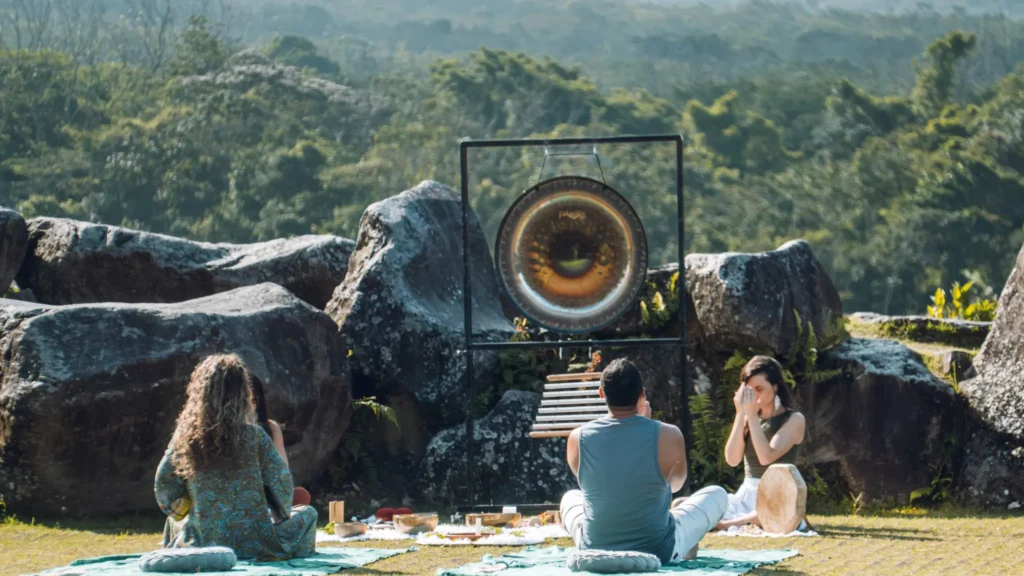
At Moon Gate Wellness Sanctuary in La Fortuna, Costa Rica, nestled beneath the Arenal Volcano, a typical day looks nothing like a spa weekend. Based on the program framework the sanctuary has developed, guests follow a structured rhythm of morning breathwork, practitioner-guided Ayurvedic therapies, dosha-specific meals, ceremonial practice, and nature immersion. Each element is intentional. Nothing is simply decorative. That distinction, between an experience designed to relax you and a program designed to change you, is exactly what this article will unpack. By the end, you’ll know which option fits your goals, your timeline, and the kind of results you’re actually after.
Ayurveda retreat vs spa: the philosophy behind each experience
A spa is a service. It offers treatments that feel good and produce short-term physical and emotional relief. The goal is to leave you feeling better than when you walked in, and that is a legitimate goal. It’s just a narrow one.
An Ayurvedic retreat is a system. It draws on an ancient Vedic medical tradition, one scholars date to at least 3,000 years ago, with roots that may extend considerably further, to identify your unique constitution (your dosha), locate the imbalances driving your symptoms, and use targeted therapies to correct them. The program begins with a clinical assessment and ends with a protocol designed specifically for your body and current state. One experience begins and ends with your comfort. The other begins with a diagnosis.
Ayurveda treats the body as an intelligent system that can fall out of balance due to chronic stress, poor diet, environmental toxins, and suppressed emotions. A genuine Ayurvedic detox retreat isn’t about pampering. It’s about correction and restoration at a systemic level, addressing the root cause of imbalance rather than managing how it feels on the surface.
How your days actually unfold: wellness retreat vs spa
The daily structure of a spa stay and an Ayurvedic retreat are almost nothing alike, and the rhythm of each tells you exactly what it’s designed to do.
Spa stays are largely self-directed. You book treatments in advance or walk in, enjoy your session, use the facilities, and fill the rest of your time however you choose. There’s no prescribed schedule, no daily check-in with a practitioner, and no structure designed to build on what happened the day before. That freedom is a large part of the appeal.
A Panchakarma retreat or multi-day Ayurvedic program runs on intentional rhythm. At a sanctuary like Moon Gate, your day begins with morning meditation, pranayama, or gentle yoga before treatments start. A prescribed therapy block follows: Abhyanga massage, Shirodhara, herbal steam, or whatever the practitioner has designed for your specific protocol. Ayurvedic meals tailored to your dosha are built into the schedule. Afternoon sessions might include workshops, forest bathing, or ceremonial practice. Each day builds on the previous one. Nothing is random. The structure itself is therapeutic.
Who is treating you, and why credentials matter
This is the question most people forget to ask before booking. Practitioner qualifications differ dramatically between an Ayurveda spa and a genuine Ayurvedic retreat, and that difference directly affects both your safety and your results.
Spa therapists are typically licensed massage therapists or estheticians trained in specific techniques. They’re skilled at what they do, but they’re not diagnosing your constitution, identifying systemic imbalances, or designing a clinical treatment protocol. Their scope is technique-based, not assessment-based.
A legitimate Ayurvedic retreat should have an Ayurvedic physician holding a BAMS degree (Bachelor of Ayurvedic Medicine and Surgery) at minimum, or an MD in Ayurveda for more complex programs. It’s worth noting that a BAMS is an Indian medical qualification and does not carry U.S. medical licensure; in domestic or international retreat contexts, the National Ayurvedic Medical Association (NAMA) offers recognized credential tiers, Ayurvedic Practitioner (AP) and Advanced Ayurvedic Practitioner (AAP), that provide a meaningful benchmark for non-Indian settings. Whichever credential applies, that practitioner should conduct your initial consultation, design your treatment plan, and check in with you throughout the program.
Before booking, ask directly: who designs my treatment plan, what are their credentials, and are the therapists supervised by a qualified Ayurvedic physician? The answers will tell you immediately whether you’re looking at a wellness spa with Ayurvedic aesthetics or a genuine healing retreat. If no one can answer those questions clearly, that’s your answer.
Ayurveda retreat vs spa: comparing real outcomes
Spa treatments produce real, measurable short-term effects: muscle relaxation, reduced cortisol, improved sleep quality, and a general sense of ease. Studies on relaxation therapies, including massage, consistently document these physiological shifts in the hours following treatment. Most of that benefit also fades within days of returning to normal life. The spa experience is not designed to create lasting structural change. It’s designed to create a window of relief, which is genuinely useful when relief is what you need.
Short-term benefits (spa)
Relaxation, cortisol reduction, and improved short-term sleep quality are the primary documented outcomes of spa treatments. These effects are real and valuable, but they are tied to the treatment itself rather than to any cumulative protocol.
Long-term outcomes (Ayurvedic retreat)
A well-designed Ayurvedic retreat aims to rebalance the nervous system, improve digestion, clear accumulated toxins (ama), and reset behavioral patterns around food, sleep, and stress. Observational data from retreat programs and practitioner-reported outcomes suggest that benefits from a structured Ayurvedic program, when aftercare protocols are followed closely, can persist for several weeks or months after the program ends. These changes are more difficult to achieve quickly, which is why the programs run longer.
What separates a meaningful retreat experience from genuinely lasting change is what happens after you leave. Moon Gate Wellness Sanctuary addresses this directly with a structured post-retreat integration program led by embodiment guide Oliveyah Fisch. Guests are encouraged to confirm the current scope and format of that program directly with the Moon Gate team, as offerings evolve. That kind of structured support is what most spa stays, and even many Ayurvedic retreats, fail to provide. It’s the bridge between a peak experience and a genuinely different daily life.
It’s also worth knowing that intensive Ayurvedic therapies carry more contraindications than standard spa treatments. Pregnancy, active infection, severe anemia, uncontrolled hypertension, significant bleeding disorders, and recent surgery are among the conditions that require special consideration before entering a Panchakarma-style program. A reputable retreat will screen for these during your initial consultation, which is another reason practitioner credentials matter so much.
How to choose based on your actual goals
A spa stay is the right call when you need two to four days of genuine rest, you’re not dealing with a significant health issue or burnout, your schedule won’t allow a week or more away, and you want the freedom to move through an experience at your own pace. Spas are honest about what they offer and they deliver on that promise well. There’s no hierarchy here. A spa is simply the right tool when relaxation is the actual goal.
You need an Ayurvedic retreat when you recognize yourself in this list:
- You’re carrying months of chronic stress or burnout that sleep and weekends aren’t touching
- You’ve noticed persistent symptoms: poor digestion, disrupted sleep, low energy, or a sense of disconnection from yourself
- You’re navigating a significant life transition and want structured, practitioner-guided support through it
- You want results that follow you home, not just a window of relief
If any of those resonate, a spa weekend won’t reach deep enough. You need a program built on clinical assessment, daily structure, and practitioner-guided correction over multiple days. That’s exactly what an Ayurvedic retreat is designed to deliver, and it’s what Moon Gate Wellness Sanctuary was built around: a multi-day healing journey in the Costa Rican rainforest, guided by experienced Vedic and Ayurvedic practitioners, with continuity built in through a structured post-retreat integration program to carry the work home with you.
Making the decision
The clearest way to frame this choice: a spa treats the surface, and an Ayurvedic retreat works with the whole system. Neither is wrong. They’re designed for different needs, different timelines, and different kinds of results. The question is always which one matches where you actually are right now.
If you’re still weighing the ayurveda retreat vs spa decision after reading this far, you’re probably not just looking for a relaxing weekend. You’re looking for something that sticks, that changes how you feel six months from now, not just six hours from now. That’s the conversation Moon Gate Wellness Sanctuary was built for.
Explore Moon Gate’s retreat calendar or reach out to our team directly to review sample daily schedules, and program details for your stay. That information will give you a clear picture of what to expect, and whether the timing is right. When you’re ready to stop browsing and start planning, the sanctuary is ready for you.